(717) 336-5030        

Petrochemical Coatings That Protect Your Equipment

Industrial technician spraying protective coating on a heavy-duty valve component.

Your equipment operates in some of the most demanding environments in manufacturing. Without the right protection, you face costly downtime, premature failures, and expensive replacements. Petrochemical coatings from Precision Coating Technology & Manufacturing (PCTM) are engineered to keep your components performing reliably, even in the harshest conditions.
Why Petrochemical Equipment Needs Specialized Coatings

Standard coatings are not built for the chemical exposure, pressure cycles, and thermal stress that petrochemical and oil and gas environments demand. When your coating fails, your equipment fails with it. That is why your parts need industrial petrochemical coatings designed specifically for these conditions:

Corrosion Protection

Chemical exposure and moisture degrade unprotected metal surfaces over time. A properly applied coating creates a continuous barrier that blocks corrosion at the surface level, extending the service life of your components.

Chemical Resistance

Your parts may come into contact with solvents, acids, hydrocarbons, and other aggressive substances. The right coating resists chemical attack without breaking down, so your components stay intact and functional.

Abrasion Resistance

Moving parts, sliding contact, and abrasive media wear down surfaces quickly. Protective coatings add a hard, durable layer that reduces wear and keeps your parts operating within tolerance longer.

Extreme Temperatures

Petrochemical processing environments often involve high heat cycling and thermal shock. PCTM applies coatings rated to perform under extreme temperatures so your components do not fail when the heat rises.

Harsh Chemical Environments

Whether your parts are exposed to chemical vapors, direct fluid contact, or corrosive byproducts, the right coating keeps the base material isolated and protected.

The right petrochemical coating protects your output and your timeline. At PCTM, we’ll help you identify the right process for your application so your parts are built to last, not just to ship.

Coating Solutions Built for the Petrochemical Industry

Your part geometry, service environment, and performance requirements determine the right solution. At PCTM, we offer multiple coating processes suited to petrochemical and oil and gas coating applications.

PTFE and Fluoropolymer Coatings

PTFE coatings deliver exceptional chemical resistance, low friction, and thermal stability. They resist a wide range of solvents, acids, and aggressive media, making them well suited for valves, fittings, fasteners, and process components.

Epoxy Powder Coatings

Epoxy coatings form a hard, seamless bond to metal surfaces. They offer strong adhesion, chemical resistance, and resistance to impact, making them a reliable choice for equipment exposed to corrosive fluids and harsh chemical environments.

Electrostatic Spray Powder Coating

A consistent, durable finish applied using electrical charge to bond powder uniformly to metal surfaces. This is one of the spray coatings for petrochemical industry that is well suited to bulk orders and larger components that need even coverage and repeatable results.

Fluid Bed Powder Coating

For complex shapes and parts requiring thicker protection, fluid bed coating provides complete envelopment of the substrate, ensuring no surface is left exposed.

What to Expect From Your Petrochemical Coating Services

When you work with PCTM, you get more than a coating application. You get a partner who understands your engineering requirements and helps you select the right process for your application.

Your petrochemical coating services from PCTM include:

  • Thorough substrate preparation and pretreatment
  • Coating selection guidance based on your service environment
  • Consistent application quality across production runs
  • Reliable turnaround to keep your schedule on track

Our PCTM team serves manufacturers across Pennsylvania, the Mid-Atlantic region, Southern New England, and the Midwest. Pickup and delivery are available for select clients within 50 miles of Denver, PA.

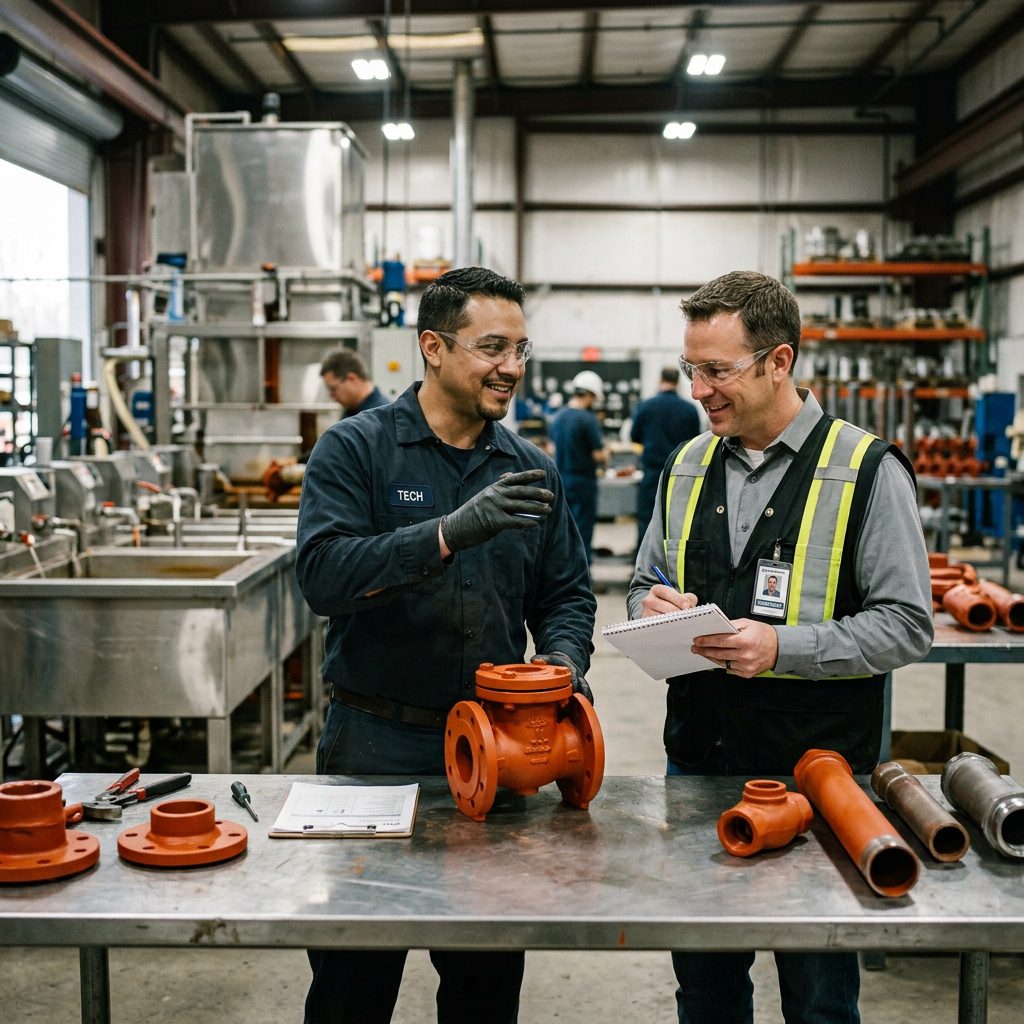
Industrial technician and engineer reviewing a coated petrochemical valve at a manufacturing facility.

Work With a Petrochemical Coatings Company You Can Trust

Your equipment and your production schedule are too important to leave to chance. At PCTM, we have been helping manufacturers solve coating challenges since 1988. As your petrochemical coatings company, our goal is to help you protect your parts, reduce failures, and keep production moving.

Not sure which coating is right for your application? Talk to our team. We will review your part requirements, service environment, and production goals to recommend the right process.

Frequently Asked Questions About Petrochemical Coatings

Have questions about petrochemical coatings for your application? Here are answers to some of the most common questions we hear from engineers and manufacturers.


What types of coatings work best for petrochemical applications?

The right coating depends on your specific service environment. PTFE and fluoropolymer coatings are commonly used for petrochemical components because they offer strong chemical resistance, low friction, and thermal stability. Epoxy powder coatings are a reliable choice when parts face heavy impact and direct chemical exposure. Our team will review your application requirements and recommend the most appropriate process.

How do petrochemical coatings protect against corrosion?

Petrochemical coatings form a continuous barrier between the metal substrate and its environment. This barrier prevents moisture, chemicals, and corrosive byproducts from reaching the base material. When the coating is applied and cured correctly, it significantly extends the service life of your components and reduces the risk of premature failure.

Can your coatings handle high-temperature petrochemical environments?

Yes. Certain fluoropolymer and PTFE-based coatings are specifically formulated to perform under extreme temperatures, including high heat cycling and thermal shock. During your consultation, we will confirm the temperature range your parts operate in and match you with a coating rated for those conditions.

What is the difference between chemical resistance and corrosion protection in coatings?

Corrosion protection focuses on preventing oxidation and surface degradation caused by moisture and environmental exposure. Chemical resistance refers to a coating’s ability to withstand direct contact with aggressive substances such as solvents, acids, and hydrocarbons without breaking down. Many petrochemical applications require both properties, and selecting the right coating material ensures your parts are covered on both fronts.

Does PCTM work with manufacturers outside of Pennsylvania?

Yes. PCTM serves manufacturers across Pennsylvania, the Mid-Atlantic region, Southern New England, and the Midwest. For clients within 50 miles of our Denver, PA facility, we also offer pickup and delivery services. If you are outside that radius, contact us to discuss logistics for your project.

Looking for a coating service you don't see on our site?

Tim, our founder, created this business by searching for one-of-a-kind projects that nobody else was performing in the area. We take pride in specializing in these types of unique jobs that you won't find anywhere else.